

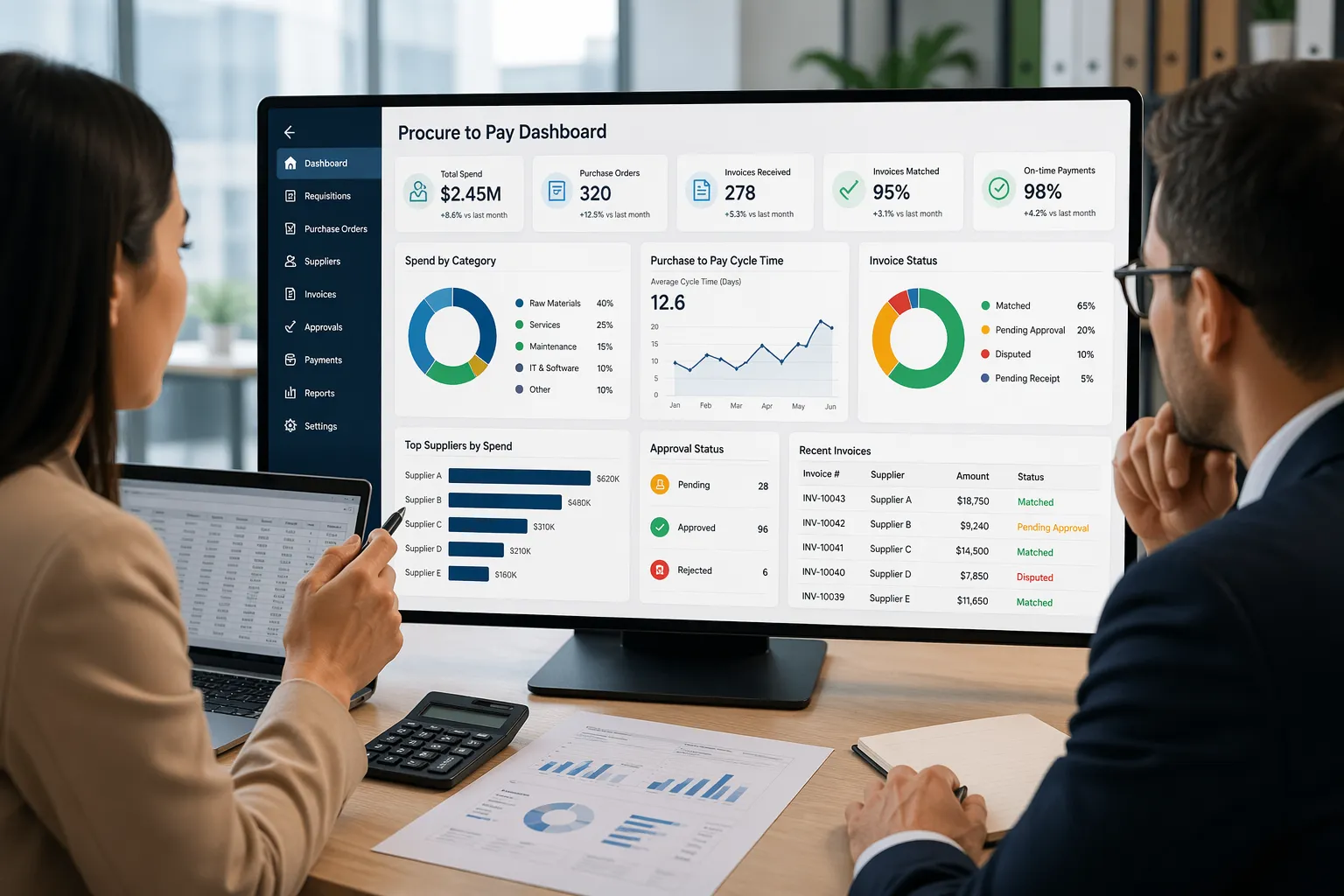
What is Procure to Pay?
Every sector likes to sling about acronyms. It’s an often-appreciated shorthand that saves time, but it shows that you’re in the game, you know what you’re talking about. An insider. The military, government, sports, science, and business love acronyms.
So here we go – P2P – the P2P Cycle, and the procure to pay (P2P) process all speak to the same thing. The Process of getting the raw material to be used in manufacturing a “widget” (from Wikipedia: Widget (economics), a placeholder name for an abstract unit of production, such as manufactured device or other product), and paying for that raw material.
It is the process of obtaining the raw materials needed for manufacturing a product or providing a service and making payment for it. That’s all there is to it! That’s the P2P Meaning! So, the answer to What is P2P is quite simple.
But the process itself is crucial, and a little more complicated than the acronym. And those complications will be the topic of our discussion here.
What Is Procure to Pay Process?
The procure to pay process is the structured business workflow through which goods or services are identified, requested, purchased, received, verified, and paid for. In simple terms, the procure to pay process starts when a business identifies a need and ends when the supplier is paid correctly and on time. In finance and accounting operations, the procure to pay process is used to connect procurement activity with invoice validation, approvals, and payment control.
The terms procure to pay, p2p process, procure to pay automation and procure to pay cycle are closely related and are often used interchangeably. While the wording may differ across companies, the meaning remains largely the same. The procure to pay process is designed to create a controlled path from purchase request to final settlement. Because of that, the procure to pay process is considered an important part of financial discipline, cost visibility, and supplier management.
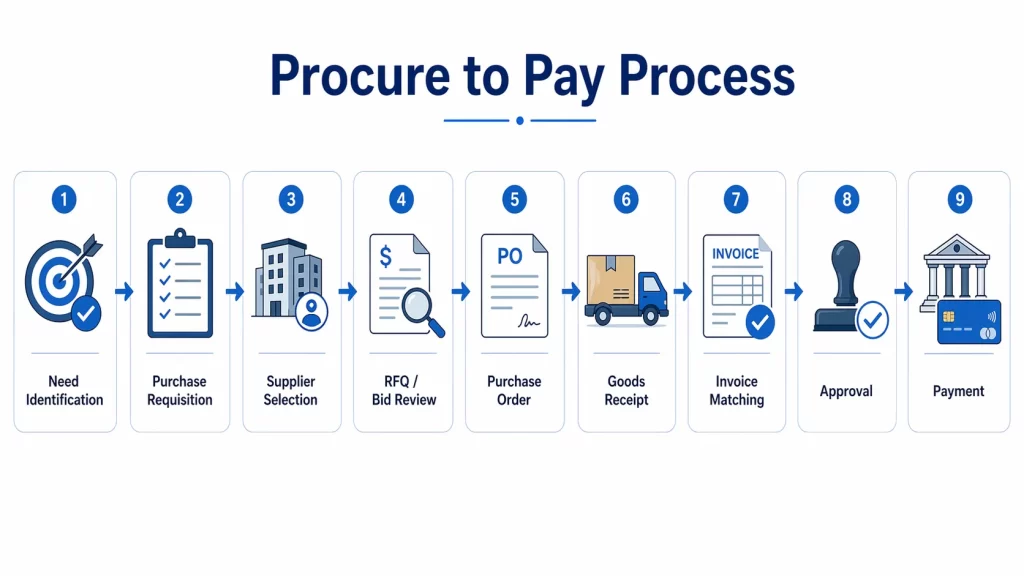
To answer the question, what is procure to pay process and its essential steps, it should be understood as the full sequence that covers need identification, supplier selection, purchase order creation, goods or service receipt, invoice matching, approval, and payment execution. Each stage in the procure to pay process is linked with the next stage so that transactions can be tracked, reviewed, and completed with greater accuracy. In many organizations, the p2p process is also used to support policy compliance and reduce uncontrolled spending.
The procure to pay cycle is relied on because better oversight can be created across purchasing and accounts payable activity. When the procure to pay process is managed well, delays can be reduced, documentation can be improved, and supplier obligations can be handled more consistently. For that reason, the procure to pay process is not viewed only as a purchasing workflow. It is also treated as a finance control framework that supports operational efficiency and payment accuracy.
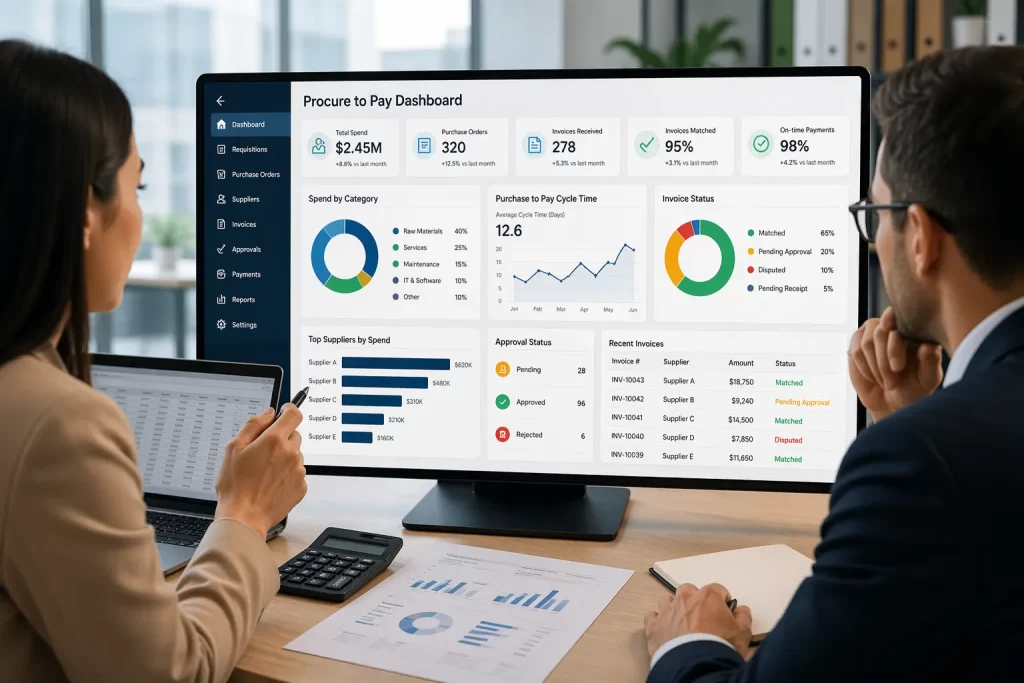
9 Essential Steps in the Procure to Pay Cycle
The procure to pay process moves through a clear set of steps, from identifying a business need to making the final payment. Each step in the procure to pay cycle supports better control, clearer records, and smoother coordination between procurement and finance teams.
- Identify Business Need
The process begins when a department identifies a need for goods or services. This is usually handled by the requesting team. Common errors include unclear requirements, wrong quantity, or poor budget planning. A basic internal request or need note is usually created at this stage.
- Create Purchase Requisition
Once the need is confirmed, a purchase requisition is prepared for internal approval. This step is often owned by the requesting department and reviewed by management or procurement. Errors may include incomplete details or missing approvals. The document created is the purchase requisition.
- Supplier Sourcing and Evaluation
After approval, possible suppliers are identified and reviewed. This stage is usually handled by the procurement team. Price, quality, reliability, and delivery capability are checked. Common errors include weak supplier review or selection based only on low price. Supplier comparison records may be created here.
- Request for Quotation and Bid Review
If more than one supplier is available, quotations are requested and compared. Procurement usually manages this step with support from other teams if needed. Errors can include unclear quotation requests or poor bid comparison. The main documents are the RFQ, supplier quotes, and comparison sheet.
- Purchase Order Creation
After the supplier is selected, a purchase order is issued with item details, price, quantity, and terms. This step is generally owned by procurement. Errors often include wrong pricing, missing terms, or incorrect item details. The main document created is the purchase order.
- Goods or Service Receipt
When the goods or services are delivered, they are checked against the purchase order. This is usually handled by the receiving team, warehouse, or user department. Common errors include missing delivery checks, damaged items, or partial receipt not being recorded. A goods receipt note or service confirmation is created.
- Invoice Matching and Validation
The supplier invoice is then matched with the purchase order and receipt record. This step is usually handled by accounts payable. Errors may include invoice mismatch, duplicate billing, or wrong amount. The documents used here are the invoice and matching records within the procure to pay process.
- Approval Workflow
If the invoice is correct, it moves through the approval workflow. Department heads, finance, or managers usually handle this stage. Common issues include delayed approval or missing documents. Approval records or workflow logs are created to support control in the p2p process.
- Payment Processing and Record Closure
In the final step, payment is released based on agreed terms and the transaction is recorded in the system. This is usually handled by the finance or accounts payable team. Common errors include late payment, duplicate payment, or incomplete posting. Payment confirmation and accounting records close the procure to pay process.
Why the Procure to Pay Process Matters for Business Operations
The procure to pay process matters because a more controlled approach to purchasing is created across the business. When buying activity is handled through a defined workflow, requests can be reviewed properly, approvals can be recorded, and spending can be aligned with business needs. As a result, unnecessary purchases can be reduced, and stronger control can be maintained over procurement activity.
Better spend visibility is also supported through the procure to pay process. When each request, purchase order, invoice, and payment is captured within the same workflow, a clearer view of company spending can be achieved. This makes it easier for finance teams to understand where money is being used, which suppliers are being paid, and how purchasing patterns are changing over time. In the broader procure to pay cycle, this visibility helps management make more informed budgeting and sourcing decisions.
Another important benefit is the reduction of invoice and payment errors. In many businesses, mistakes are caused when purchasing records, goods receipts, and supplier invoices are not matched correctly. Through a structured p2p process, these records can be checked in a more disciplined way before payment is released. This helps reduce duplicate payments, incorrect invoice amounts, missed approvals, and avoidable processing delays.
The procure to pay process also supports stronger vendor relationships. Suppliers expect timely communication, accurate purchase orders, and payments that are made according to agreed terms. When the process is managed well, fewer disputes are created, and supplier confidence can be improved. Over time, this can support more stable supplier partnerships and better service continuity for the business.
Compliance and approval discipline are also strengthened through the procure to pay process. Internal policies can be followed more consistently when purchases are routed through defined approval stages. Documentation can be maintained more completely, and transactions can be reviewed more easily during audits or internal checks. Because of this, the procure to pay workflow is often treated as an important operational control, not just a routine purchasing activity.
Cash flow planning is improved as well. When purchasing commitments, invoice due dates, and payment schedules are tracked more accurately, finance teams can plan outgoing cash with greater confidence. In a well-managed procure to pay cycle, short-term obligations become easier to forecast, and payment timing can be managed in a way that supports working capital discipline. For finance and accounting service teams, this makes the procure to pay process a valuable part of both operational control and financial planning.
Common Challenges in the P2P Process
Even a well-planned procure to pay process can face delays and control issues when each step is not handled carefully. In many businesses, the biggest problems come from manual work, missing records, weak approvals, and poor coordination between procurement and finance teams. These issues can slow down the procure to pay cycle and affect both cost control and supplier trust.
One common challenge is inaccurate data entry. If item details, invoice amounts, supplier names, or payment terms are entered incorrectly, errors can move through the full procure to pay process. This can lead to mismatched invoices, duplicate payments, or reporting problems.
Approval delays are also common. When purchase requests or invoices are not reviewed on time, the entire p2p process can slow down. As a result, orders may be delayed, supplier payments may be missed, and internal teams may struggle to plan properly.
Another challenge is poor document control. If purchase orders, receipts, and invoices are not properly matched, payment errors become more likely. Businesses also face supplier issues when communication is weak or when delivery terms are not clearly tracked. For this reason, a disciplined procure to pay process is needed to reduce friction and improve reliability.
Benefits of a Well-Managed Procure to Pay Process
A strong procure to pay process helps businesses create better control over purchasing and payment activities. When each stage is handled in a structured way, work becomes more accurate, more visible, and easier to manage.
One key benefit is better cost control. When purchases move through approved steps, unnecessary buying can be reduced. The procure to pay cycle also improves visibility into where money is being spent and how supplier payments are being managed.
Another benefit is improved accuracy. Matching purchase orders, receipts, and invoices helps reduce billing mistakes and payment errors. This makes the procure to pay process more dependable and supports better financial records.
A well-managed procure to pay workflow also helps strengthen supplier relationships. Suppliers benefit from clear orders, fewer disputes, and more timely payments. In addition, compliance improves because approvals, supporting documents, and transaction history are easier to review and audit.
How Automation Improves the Procure to Pay Cycle
Automation makes the procure to pay process faster, more consistent, and easier to control. Manual tasks such as requisition entry, invoice capture, approval routing, and data validation can be handled with less effort when digital tools are used.
In the procure to pay cycle, automation can help reduce paper-based work and lower the risk of human error. For example, invoice data can be captured more accurately, approval workflows can move faster, and matching checks can be completed with more consistency.
Automation also improves visibility. Finance and procurement teams can track order status, invoice exceptions, and payment progress more clearly. This strengthens the p2p process and helps businesses respond faster when problems appear.
When used properly, automation does not replace control. Instead, it supports a more reliable procure to pay process by making routine steps more efficient and easier to monitor.
KPIs to Measure Procure to Pay Process Performance
Businesses need clear measures to understand whether the procure to pay process is working well. Performance tracking helps identify delays, errors, and areas where efficiency can be improved.
One useful KPI is purchase order cycle time. This shows how long it takes for a request to move from approval to order creation. Another is invoice processing time, which helps finance teams understand how quickly supplier invoices are validated and prepared for payment.
Exception rate is also important in the procure to pay cycle. A high exception rate may show frequent invoice mismatches, missing documents, or weak process control. On-time payment rate is another useful measure because it reflects how well supplier obligations are being handled.
By reviewing these KPIs regularly, businesses can improve the procure to pay process and strengthen both operational control and financial discipline.
Procure to Pay Process Examples Across Industries
The procure to pay process is used across many industries, although the type of purchase may differ. In manufacturing, it may be used to buy raw materials, machine parts, or packaging supplies. In healthcare, it may support the purchase of medical equipment, office supplies, or service contracts.
In retail, the procure to pay workflow helps manage inventory purchases, store materials, and vendor payments. In logistics, it may support fuel-related purchases, warehouse supplies, and outsourced service needs. In professional services, the p2p process may be used for software subscriptions, office operations, and third-party support services.
These examples show that the procure to pay cycle is not limited to one type of business. It is a core business process that supports spending control and payment accuracy across industries.
Why Businesses Outsource the Procure to Pay Process
Seize the Day. Outsource your P2P Cycle.
So, what have we learned? It’s a lot more complicated than it looks at first glance. The P2P Cycle is filled with terrifying possibilities for sheer disaster.
But this story can have a happy ending, again and again.
Consider what many business leaders already know and do. Engage a Business Process Outsourcing (BPO) partner to handle your P2P. someone that does this kind of work day in and day out. It’s more accurate when done by an experienced, trained, and skilled team. It’s less expensive because that team is not in-house, so there’s no employee overhead. A streamlined department that can handle the work quickly, with reduced errors, and no redundant functions. Trustworthy and quick to react, with state-of-the-art training and practices. A team that stays on top of the latest rules and regulations. That also has the most current software and hardware – at no capital expenditure from you.
And like any competitive business, there are leaders and then the rest. Make sure you pick a leading BPO, one with decades of experience, continuing training, smart, innovative employees dedicated to making this collaboration a success.
Someone like Rely Services. A driving force for change in the world of business. Contact them today for a no-obligation assessment of your needs, and a discussion of the many ways of partnering with them can help you achieve your goals.
Frequently Asked Questions About the Procure to Pay Process
What is procure to pay process and its essential steps?
The procure to pay process is the full workflow from identifying a purchasing need to making supplier payment. Its essential steps usually include requisition, sourcing, quotation review, purchase order creation, receipt, invoice matching, approval, and payment.
What is the difference between procure to pay and accounts payable?
Procure to pay covers the full purchasing and payment workflow. Accounts payable is only one part of that process and mainly focuses on invoice handling and payment.
Why is the procure to pay cycle important?
The procure to pay cycle is important because it helps control spending, improve record accuracy, support compliance, and manage supplier payments more effectively.