

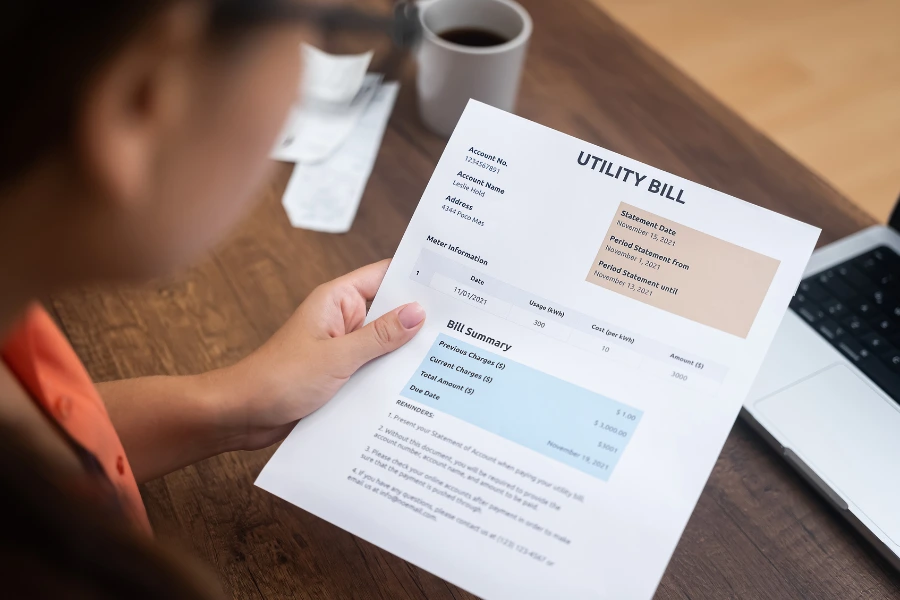
Utility expenses are a recurring operating cost for businesses across industries. Electricity, natural gas, water, sewer, and other utility services are necessary for daily operations, but managing these expenses can become increasingly complex as a business grows.
For a company operating from a single location, reviewing utility bills may be relatively straightforward. However, businesses with multiple offices, retail stores, warehouses, healthcare facilities, manufacturing plants, or commercial properties may receive hundreds or even thousands of utility invoices every month.
In these situations, simply paying utility invoices without reviewing them can create financial and operational challenges. This is where utility bill validation becomes essential.
A structured utility invoice validation process helps businesses identify discrepancies, improve cost visibility, and make better decisions about utility expenses.
The U.S. Department of Energy explains that utility-bill validation tools can help organizations audit invoices for issues such as incorrect meter readings or charges. It also notes that some energy-management systems extend this function into validation, payment processing, and invoice storage.
What Is Utility Bill Validation?
Utility bill validation is a systematic review of a utility invoice to verify that the charges are correct before the bill is approved and paid.
- A strong validation process checks whether:
- The invoice belongs to the right business location.
- The account number and meter number are correct.
- The billed period does not overlap with another invoice.
- The invoice is based on an actual rather than estimated meter read.
- Usage is reasonable compared with prior periods and operating conditions.
- Energy, gas, water, demand, delivery, and fixed charges match the applicable tariff or contract.
- Taxes, riders, fees, exemptions, credits, and adjustments are correctly applied.
- The same invoice or charge has not already been paid.
- The account remains active and belongs to the organization.
- The invoice is coded to the appropriate legal entity, cost center, department, or property.
Utility bill validation should be part of a wider financial-control framework. It is not simply a back-office data-entry exercise. It helps organizations decide whether a bill is correct, whether it should be paid, and whether an exception requires investigation with the provider.
Why Utility Bill Validation Matters for Accurate Cost Management?
Accurate cost management depends on accurate data. If a business receives inaccurate utility invoices, the problem does not stop with the utility payment. Incorrect information can affect accounting records, departmental budgets, cost allocation, financial forecasting, property reporting, and operational decision-making.
Utility bill validation creates an additional layer of financial control by reviewing invoice data before it becomes part of the business’s financial records.
Helps Identify Potential Billing Discrepancies before Payment
One of the primary reasons businesses implement utility bill validation is to identify potential discrepancies before an invoice is approved for payment. Commercial utility invoices can contain multiple components, including energy usage charges, delivery charges, demand charges, taxes, surcharges, adjustments, and service fees.
A change in the total invoice amount does not automatically indicate an error. However, a validation process can flag invoices that require further review.
For example, an invoice may be flagged because:
- Consumption increased significantly compared with historical usage.
- The billing period overlaps with a previous invoice.
- The invoice contains an unexpected charge.
- A rate has changed.
- The meter information does not match the account.
- A credit or adjustment is missing.
The objective is to identify exceptions and investigate them before the invoice is processed as a routine payment.
This is particularly valuable for businesses managing a large number of locations where manual review of every invoice may not be practical.
Improves Visibility into Actual Utility Costs
Many businesses know their total monthly utility spend but have limited visibility into what is driving that cost. Utility invoice validation helps create cleaner and more reliable data.
For example, validated invoice data can help a business understand:
- Electricity costs by location
- Utility expenses by property
- Monthly consumption trends
- Changes in demand
- Cost differences between facilities
- Unusual usage patterns
- Regional utility cost variations
This information is important because businesses cannot effectively manage costs they do not fully understand.
The U.S. Energy Information Administration reports significant differences in electricity prices across states and regions. In 2025, the national average commercial electricity price was 13.41 cents per kWh, but actual prices varied considerably by location.
For multi-location businesses, this means that comparing only total utility spending may not provide an accurate picture.
Supports More Accurate Budgeting and Forecasting
Budgeting becomes difficult when historical expense data contains inaccuracies or unexplained anomalies. For example, if a business records an incorrectly billed utility invoice as a normal operating expense, future budgets may be based on inaccurate data. Utility bill validation helps improve the quality of historical utility expense information.
When businesses have more reliable invoice data, they can better evaluate:
- Seasonal utility spending
- Location-specific expenses
- Energy consumption patterns
- Historical rate changes
- Operational cost trends
This can support more accurate financial forecasting. Instead of assuming that utility expenses will follow a simple year-over-year pattern, businesses can analyze the underlying components that influence their utility costs.
Utility Bill Validation Supports Better Cost Control
Cost management is not only about reducing expenses. It is also about understanding, monitoring, and controlling expenses. A utility invoice may be accurate even if the amount is higher than expected.
For example, higher costs may result from increased operating hours, higher production, seasonal weather conditions, or increased demand. Validation helps separate legitimate cost increases from invoices that require further investigation. This allows businesses to focus on the right issues.
For example:
| Situation | Possible Reason |
| Higher electricity bill | Increased consumption |
| Higher demand charge | Peak demand increased |
| Higher cost per kWh | Rate adjustment |
| Duplicate invoice | Processing or billing issue |
| Unusual consumption | Meter, operational, or billing issue |
| Unexpected fee | New charge requiring review |
The purpose of utility bill validation is to provide the information necessary to determine which explanation applies.
Helps Detect Unusual Consumption Patterns
Utility invoice validation can also support operational monitoring. When businesses compare current consumption against historical data, unusual patterns can become easier to identify.
For example, a warehouse that normally consumes 100,000 kWh per month may suddenly report 160,000 kWh. The increase could be legitimate.
However, it could also indicate:
- A meter issue
- Incorrect billing information
- Equipment operating inefficiently
- A facility operating outside normal hours
- A system malfunction
- An operational change
Without invoice validation, the increased cost may only appear as a larger number in an accounts payable system. With validation, the invoice can be flagged for investigation.
Helps Businesses Manage Complex Multi-Location Utility Portfolios
The importance of utility invoice validation increases as the number of locations increases. A business operating across multiple states may work with different electricity, natural gas, water, and sewer providers.
Each provider may have different:
- Invoice formats
- Billing cycles
- Rate structures
- Account requirements
- Charges and surcharges
Managing this information manually can be difficult. A centralized validation process helps standardize how invoices are reviewed across the organization. Instead of each location managing invoices independently, businesses can establish consistent validation rules.
For example, invoices can be checked against:
- Historical usage
- Approved account records
- Expected billing periods
- Rate information
- Location details
- Duplicate invoice records
This creates greater consistency across the utility management process.
Supports Energy Benchmarking and Performance Analysis
Utility bill validation provides an important foundation for benchmarking. Benchmarking allows businesses to compare energy performance over time or across similar facilities. However, inaccurate or incomplete invoice data can reduce the value of benchmarking.
For example, if one facility has an incorrectly recorded billing period or inaccurate consumption data, comparing that location with other facilities may lead to misleading conclusions.
The U.S. Environmental Protection Agency’s ENERGY STAR program reports that buildings that consistently benchmark their energy use save an average of 2.4% per year.
While utility bill validation alone does not guarantee energy savings, accurate utility data provides a stronger foundation for benchmarking and identifying opportunities for improvement.
A business must first understand what it is consuming and paying before it can effectively evaluate where improvements may be possible.
Reduces the Risk of Duplicate or Incorrect Invoice Payments
Businesses processing large volumes of invoices face the risk of duplicate payments. This risk can increase when invoices are received through multiple channels, including:
- Supplier portals
- Paper invoices
- Electronic billing systems
A centralized utility invoice validation process can help identify potential duplicates by comparing account numbers, invoice numbers, service periods, locations, and invoice amounts. For example, two invoices may have different invoice numbers but cover the same account and billing period.
This does not automatically mean the invoice is incorrect, but it should trigger a review. Duplicate detection is particularly important for organizations that have multiple teams involved in utility invoice processing and payment approval.
Helps Verify Rates and Charges
Utility invoices can contain more than simple usage charges. Depending on the utility service, businesses may be billed for:
- Energy consumption
- Demand
- Delivery
- Transmission
- Taxes
- Regulatory charges
- Fuel adjustments
- Service charges
- Other surcharges
A structured utility bill validation process reviews these components and determines whether the charges appear consistent with the applicable account and billing arrangement. Businesses should not assume that every charge is incorrect simply because it is unfamiliar. Instead, unexpected charges should be investigated.
For larger commercial accounts, rate structures and tariffs can be complex. Businesses may need to review applicable utility documentation, service agreements, or state-level utility regulations to understand how specific charges should be calculated.
Improves Financial Accuracy across Departments
Utility expenses can affect multiple departments. A utility invoice may need to be assigned to:
- Finance
- Accounts payable
- Facilities
- Property management
- Operations
- Individual business units
If the invoice contains incorrect information, the resulting cost allocation may also be inaccurate. For example, an invoice assigned to the wrong location can affect property-level profitability reporting.
Similarly, incorrect utility data can influence departmental budgets and operating cost calculations. Utility invoice validation helps ensure that the information being transferred into financial and reporting systems has been reviewed for accuracy.
This is especially important for businesses that allocate utility expenses across multiple properties or cost centers.
What Should Businesses Validate on a Utility Invoice?
A utility invoice validation process should focus on the information that has the greatest impact on billing accuracy and cost management.
Account and location information
The invoice should be associated with the correct account, meter, service address, and business location.
Billing period
The start and end dates should be reviewed to identify missing or overlapping billing periods.
Consumption and usage
Current usage should be compared with historical consumption patterns and relevant operational changes.
Rates and charges
Businesses should review whether major charges appear consistent with applicable rates and account arrangements.
Duplicate invoices
The invoice should be checked against previously received and processed invoices.
Credits and adjustments
Expected credits, corrections, and adjustments should be tracked to ensure they are properly reflected.
These validation areas provide a practical foundation without requiring businesses to manually audit every invoice in the same way.
When Should a Business Consider Outsourcing Utility Bill Validation?
Businesses may consider outsourcing utility bill validation when invoice volumes become difficult to manage internally. This can happen when organizations operate across multiple locations or work with numerous utility providers.
Outsourcing may be useful when internal teams spend significant time:
- Collecting utility invoices
- Entering invoice data
- Reviewing account information
- Investigating billing discrepancies
- Managing exceptions
- Reconciling utility accounts
An outsourced utility bill management provider can support invoice collection, data extraction, validation, exception management, reporting, and account reconciliation.
This can allow internal finance teams to focus more on financial analysis and decision-making.
How Rely Services Supports Utility Bill Validation
For businesses managing utility expenses across multiple locations, utility invoice validation can be part of a broader utility bill management process.
Rely Services provides Utility Bill Management Services that support the collection, processing, validation, and management of utility invoices. The service can help organizations improve invoice accuracy, manage billing exceptions, and gain greater visibility into utility expenses.
A structured approach can include invoice data capture, utility bill validation, duplicate invoice checks, exception handling, account reconciliation, and reporting.
By centralizing these activities, businesses can establish more consistent controls over utility-related expenses.
FAQs
Is utility bill validation important for multi-location businesses?
Yes. Multi-location businesses often receive invoices from multiple utility providers with different billing formats and schedules. A centralized validation process can improve consistency and provide better visibility across the organization’s utility expenses.
Why Utility Bills Are Difficult to Validate?
Utility bills can be complex because they include multiple charges, such as usage, demand, taxes, fees, surcharges, and rate adjustments. Businesses with multiple locations may also receive invoices in different formats from different utility providers.
How often should a business validate utility bills?
Businesses should ideally validate utility bills as they are received and before payment approval. Regular monthly validation helps identify billing discrepancies early and prevents issues from continuing across multiple billing cycles.
What is the difference between utility bill validation and utility bill auditing?
Utility bill validation focuses on checking invoices for accuracy as part of the regular billing and payment process. A utility bill audit is typically a more detailed review that examines historical bills to identify errors, overcharges, or missed credits.
What is utility invoice validation?
Utility invoice validation involves checking utility invoice data against account records, historical usage, billing information, and applicable validation rules to identify potential discrepancies or unusual charges.
Can utility invoice validation be automated?
Yes, utility invoice validation can be partially automated using OCR, invoice processing, and validation tools. Automation can flag duplicate invoices, unusual charges, usage variations, and other exceptions for further human review.