

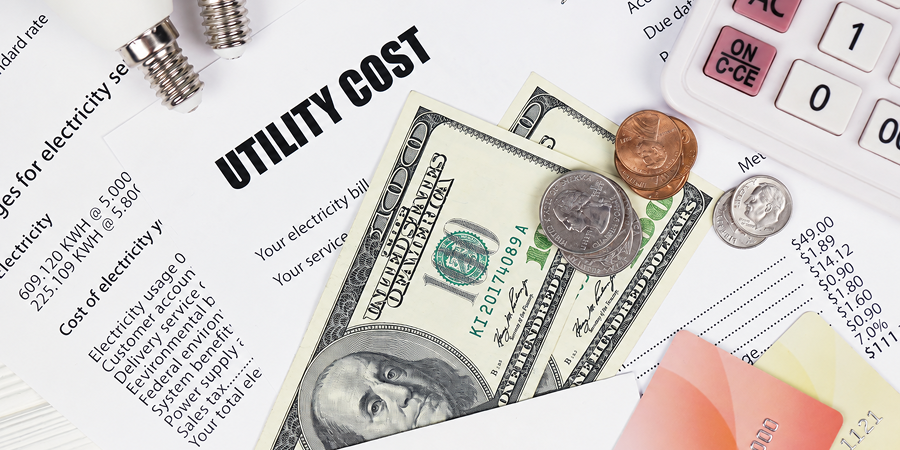
Utility costs are a recurring expense for almost every business. Electricity, natural gas, water, sewer, waste, and other utility services are essential for daily operations, but the amount businesses pay can change from month to month.
For organizations with multiple facilities, managing these costs can become even more difficult. Different locations may have different utility providers, rate structures, billing cycles, account numbers, and consumption patterns. Without a consistent process, businesses may struggle to identify billing errors, unusual usage, missed savings opportunities, or locations that are spending more than expected.
An effective utility cost control strategy helps businesses move beyond simply paying utility bills. It creates a structured process for collecting utility data, validating invoices, monitoring consumption, analysing costs, and taking corrective action.
What Is a Utility Cost Control Strategy?
Utility cost control goes beyond simply paying bills on time. It involves actively managing the factors that influence utility spending through a combination of procurement strategies, consumption optimization, billing accuracy, and ongoing monitoring.
A utility cost control strategy is a structured approach businesses use to monitor, manage, and reduce utility-related expenses.
The goal is not simply to reduce consumption. Businesses also need to make sure they are being billed correctly, using appropriate rates, managing utility accounts properly, and identifying unusual costs before they become recurring expenses.
A strong strategy typically combines:
- Utility bill collection and processing
- Invoice validation
- Utility usage monitoring
- Rate and charge analysis
- Budget tracking
- Historical cost comparison
- Location-level benchmarking
- Exception monitoring
- Reporting and continuous improvement
For businesses with many utility accounts, centralizing this information can make it easier to understand where money is being spent and where corrective action may be needed.
Why Do Businesses Need Utility Cost Control?
Utility costs can be difficult to control because they are influenced by several factors. Consumption can change with operating hours, weather, occupancy, production levels, facility size, equipment, and business activity. Rates, demand charges, taxes, and other fees can also affect the final invoice.
This means that simply comparing the total amount on one bill with the previous month’s bill may not provide enough information.
For example, a higher electricity bill could result from increased production, higher consumption, a rate change, a demand charge, or a billing error. Businesses need reliable utility data to understand the reason behind the increase.
1. Create a Centralized Utility Cost Database
The first step is to bring utility information into one organized system.
Businesses should maintain a centralized record of utility accounts, including:
- Utility provider
- Account number
- Service address
- Meter information
- Utility type
- Billing period
- Consumption
- Total charges
- Applicable rates
- Payment status
This is particularly important for businesses operating multiple offices, stores, warehouses, healthcare facilities, manufacturing sites, or other properties.
Instead of keeping information across emails, spreadsheets, paper invoices, and different departmental systems, a centralized database provides a consistent view of utility expenses.
2. Collect and Process Utility Bills Consistently
An effective cost control strategy needs a reliable invoice collection process.
Businesses should establish a standard process for receiving utility bills, recording invoice information, checking billing periods, and routing invoices for approval and payment.
Missing or delayed invoices can create additional problems. They may result in late fees, inaccurate accruals, incomplete financial reporting, or unexpected costs in a later period.
Automated invoice processing and OCR can also help extract important information from utility bills and reduce repetitive manual data entry.
3. Validate Utility Bills before Payment
Bill validation should be a core part of utility cost control.
Before an invoice is approved, businesses can check whether:
- The account belongs to the correct location
- The billing period is accurate
- Meter readings appear reasonable
- Consumption is within an expected range
- Rates and charges are correct
- Duplicate invoices exist
- Credits have been applied
- Taxes and additional fees are accurate
- Closed or inactive accounts are still being billed
Utility charges can involve complex rate structures and multiple components. Utility cost management providers commonly use account-level and meter-level analysis to identify billing discrepancies and potential savings opportunities.
A consistent validation process helps businesses address problems before incorrect charges become part of their regular expenses.
4. Monitor Utility Consumption, Not Just Cost
Tracking only the dollar amount on a utility bill can hide important information.
Businesses should monitor both cost and consumption.
For example, a facility’s electricity expense may increase by 10%, but if electricity usage increased by 15% because of higher production, the cost increase may have a different explanation than a 10% increase caused by a rate change.
Depending on the business, useful measurements may include:
- kWh of electricity
- Therms of natural gas
- Gallons of water
- Cost per square foot
- Cost per unit produced
- Cost per location
- Year-over-year consumption
Tracking these measures gives finance, operations, and facilities teams a better understanding of what is driving utility costs.
5. Establish Utility Cost Benchmarks
Businesses need a baseline to determine whether current utility performance is normal.
Historical data can be used to compare current costs and consumption against previous periods. Businesses with multiple locations can also compare similar facilities against each other.
For example, if five retail locations have similar sizes and operating hours but one location consistently has much higher utility costs, that location may require further investigation.
ENERGY STAR’s Portfolio Manager is designed to help organizations benchmark building energy use, turning information from utility bills into actionable performance information.
Benchmarking does not automatically reduce costs, but it helps businesses identify locations and patterns that deserve attention.
6. Set Utility Budgets and Monitor Variances
A utility cost control strategy should connect utility data with financial planning.
Businesses can establish monthly or annual utility budgets for individual locations, departments, or facilities. Actual utility expenses can then be compared with the budget.
When a significant variance appears, the business should investigate the reason rather than simply recording the difference.
Possible causes include:
- Higher consumption
- Seasonal changes
- Rate increases
- Demand charges
- Billing errors
- New facilities or equipment
- Changes in operating hours
- Unusual water usage
A variance-based approach allows teams to focus their attention on the costs that need investigation instead of manually reviewing every invoice in the same level of detail.
7. Review Utility Rates and Charges
Cost control should not focus only on consumption.
Businesses should also review the rates and charges applied to their accounts.
Depending on the utility and location, invoices may include energy charges, demand charges, fixed fees, taxes, surcharges, and other components.
Rate structures can also vary by location and customer classification. A business should therefore review whether accounts are being billed under the appropriate rate structure and whether changes in rates are affecting costs.
For large utility customers, detailed tariff and rate analysis can uncover opportunities that may not be visible from total invoice amounts alone.
8. Monitor Utility Costs across Multiple Locations
Multi-location businesses face an additional challenge because utility data is often spread across many accounts and providers.
A centralized reporting system can help businesses compare:
- Location-level utility costs
- Consumption trends
- Cost per square foot
- Year-over-year changes
- Budget versus actual spending
- Utility costs by facility type
This makes it easier to identify high-cost locations and investigate unusual changes.
For example, a healthcare organization could compare utility performance across clinics, while a retailer could compare stores within the same region.
9. Use Technology to Automate Utility Cost Control
Manual utility tracking becomes increasingly difficult as the number of accounts grows.
Technology can help businesses automate several parts of the process, including:
- Invoice data extraction
- Utility bill collection
- Duplicate invoice detection
- Data validation
- Usage comparisons
- Budget-versus-actual reporting
- Exception alerts
- Utility expense dashboards
Modern utility management platforms can centralize bills and provide structured data for analysis, reporting, benchmarking, and forecasting.
Automation does not eliminate the need for human review. Instead, it allows teams to focus their time on exceptions, investigations, and decisions rather than repetitive data entry.
10. Track Key Utility Cost Control KPIs
Businesses can use a small set of KPIs to measure whether their utility cost control strategy is working.
Useful metrics include:
- Total utility cost: How much the business spends on utilities.
- Cost per location: Helps compare facilities.
- Cost per square foot: Useful for comparing similar buildings.
- Consumption per unit: Useful for manufacturing and other production-based businesses.
- Year-over-year utility cost change: Shows longer-term trends.
- Budget variance: Shows whether actual spending is above or below budget.
- Invoice exception rate: Shows how many invoices require additional review.
- Billing error recovery: Tracks savings or credits recovered from incorrect charges.
These metrics give finance, operations, and facilities teams a common framework for evaluating utility performance.
11. Consider Outsourcing Complex Utility Cost Management
Managing a small number of utility accounts may be possible with an internal team. However, the process becomes more demanding as businesses add locations, providers, invoices, and utility types.
Outsourcing can help businesses manage repetitive activities such as invoice processing, data extraction, bill validation, exception handling, reporting, and utility expense analysis.
This allows internal finance and operations teams to spend less time on manual utility administration while maintaining better visibility into utility costs.
How Rely Services Supports Utility Cost Control
Rely Services helps businesses manage utility-related processes by combining utility bill processing, data extraction, validation, exception handling, and reporting.
Its utility bill management services can support businesses that need to process large volumes of utility invoices across multiple locations. The approach can help organizations centralize utility information, improve invoice accuracy, organize utility data, and provide better visibility into utility expenses.
For businesses looking to strengthen their utility cost control strategy, a structured process can provide a stronger foundation for identifying billing issues, monitoring costs, and making informed decisions.
Frequently Asked Questions
Should businesses manage utility cost control internally or outsource?
The decision depends on internal resources, invoice volume, and organizational complexity. Many mid-market and enterprise organizations benefit from outsourcing utility invoice processing and validation to free internal teams for strategic analysis while maintaining oversight of procurement and capital investment decisions.
What role does technology play in utility cost control?
Technology improves data quality through automated capture and standardization, enables exception-based monitoring to catch issues quickly, provides visibility through dashboards and reporting, and supports integration with accounting systems for seamless workflows.
How often utility cost control strategies should be reviewed?
Organizations should review utility costs monthly, conduct quarterly trend analysis, perform annual comprehensive audits, and begin procurement processes 6 to 12 months before contract expiration dates.
What is the difference between utility cost control and utility expense management?
Utility cost control focuses specifically on controlling and reducing utility-related costs. Utility expense management is broader and can include bill processing, data management, validation, reporting, and cost analysis.