


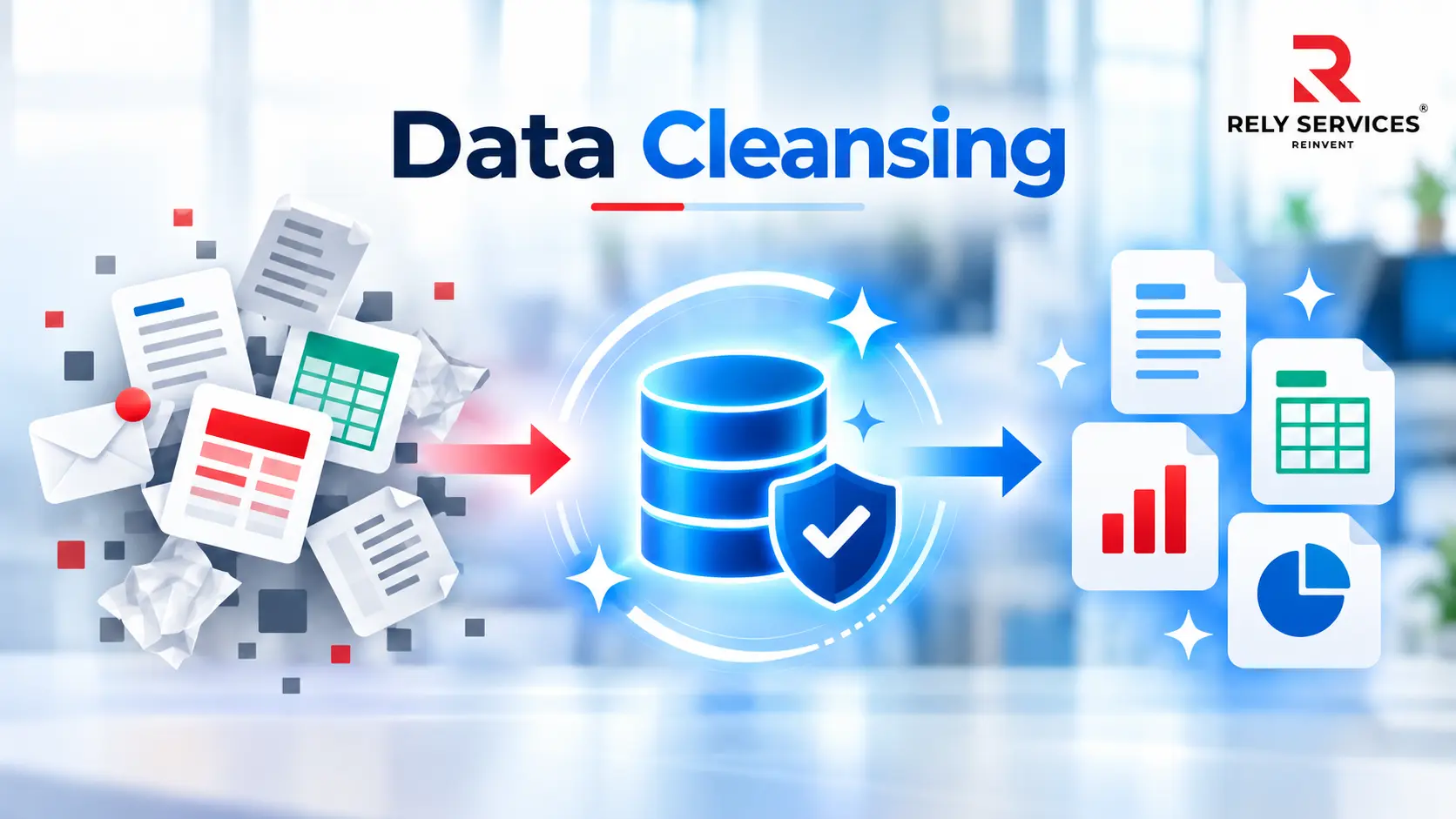
Data cleansing is the process of identifying and correcting or removing inaccurate, incomplete, duplicate, outdated, or inconsistent data from a dataset. Also known as data cleaning or data scrubbing, it helps organizations maintain reliable information for daily operations, reporting, and analysis.
For businesses that manage large volumes of records, data cleansing is an important part of maintaining data quality. It helps teams identify problems before they affect business processes and ensures that information remains useful across systems. Businesses looking to improve data accuracy and consistency can explore Rely Services’ data cleansing services.
Why Is Data Cleansing Important?
Poor-quality data can create operational problems across departments. Duplicate customer records may lead to repeated communication, incorrect invoice details can delay processing, and inconsistent information can affect business reports.
Data cleansing helps organizations address these issues by improving the reliability of the information they use. Its key benefits include:
- Improved data accuracy: Correcting errors helps teams work with more reliable information.
- Reduced duplication: Identifying duplicate records helps maintain organized databases and reduces repeated work.
- Greater operational efficiency: Employees spend less time investigating inconsistencies and correcting avoidable errors.
- More reliable reporting: Consistent records provide a stronger foundation for business analysis and decision-making.
- Better data integration: Standardized information is easier to transfer and reconcile across different systems.
Data cleansing is particularly valuable when businesses combine information from multiple sources, migrate records to a new system, update customer databases, or prepare data for reporting.
What Are the Common Data Cleansing Tasks?
Data cleansing involves different activities depending on the type of information, its intended use, and the organization’s data quality requirements.
1. Removing duplicate records
Duplicate entries can occur when information is collected through multiple channels or entered more than once. Data cleansing identifies potential duplicates and helps determine whether records should be merged, retained, or removed.
2. Correcting inaccurate information
Incorrect names, addresses, reference numbers, dates, and other fields can reduce data reliability. Teams compare questionable entries against approved source records before making corrections.
3. Handling missing information
Required fields may be blank or incomplete. A cleansing process identifies these gaps so that authorized staff can verify the source information and update records where possible. Missing values should not be filled with assumptions.
4. Standardizing formats
Different teams may record the same information in different formats. Data cleansing can standardize dates, telephone numbers, addresses, naming conventions, and other fields according to defined business rules.
5. Identifying outdated or invalid records
Records may no longer meet current business requirements or may contain values that fail validation rules. These entries should be reviewed and updated, flagged, or removed when appropriate.
How Does the Data Cleansing Process Work?
An effective data cleansing process follows defined rules rather than making changes without verification.
- Review the source data: Examine spreadsheets, databases, forms, and other records to understand their structure and identify common issues.
- Define data quality rules: Establish requirements for mandatory fields, accepted formats, valid values, and duplicate identification.
- Identify data issues: Use manual reviews, automated checks, and data profiling tools to detect missing values, inconsistencies, and potential duplicates.
- Correct or flag errors: Update records using reliable source information. Flag uncertain cases for further review instead of making unsupported changes.
- Standardize records: Apply consistent formatting and naming conventions across the dataset.
- Validate the cleaned data: Run quality checks to confirm that the records meet the agreed requirements.
- Document and monitor results: Record significant changes, review unresolved exceptions, and monitor recurring errors to improve future data collection.
The process should preserve important source information and include appropriate access controls, particularly when datasets contain confidential customer, financial, or healthcare information.
What Is the Difference Between Data Cleansing, Data Validation, and Data Transformation?
These terms are related, but each serves a different purpose.
| Process | What it does | Example |
| Data cleansing | Identifies and corrects or removes data errors. | Reviewing and resolving duplicate customer records. |
| Data validation | Checks whether information meets predefined rules. | Confirming that a required field is present and a date follows the accepted format. |
| Data transformation | Changes the structure or format of data for a specific use. | Converting dates into a standardized format before importing records into another system. |
These activities often work together. Validation can identify errors, cleansing can resolve them, and transformation can prepare the corrected data for another system or application.
What Tools Are Used for Data Cleansing?
Businesses use a combination of software and manual review to improve data quality. Common options include spreadsheet tools, database queries, data profiling software, and specialized data quality platforms.
Automation can identify duplicate patterns, flag missing fields, apply formatting rules, and process large datasets more efficiently. However, automated tools cannot reliably determine the correct value in every situation. Records that are ambiguous, conflicting, or sensitive may require human review.
The right approach depends on the dataset’s size, complexity, source systems, and business requirements. Organizations should also define quality checks and review procedures before applying bulk changes.
When Should Businesses Cleanse Their Data?
Data cleansing should be part of ongoing data management, not just a one-time cleanup project. Businesses may need it when:
- Combining records from multiple departments or systems.
- Preparing customer databases for CRM migration.
- Reviewing supplier, product, or inventory records.
- Processing large volumes of invoices and transaction data.
- Preparing datasets for reporting and analytics.
- Identifying recurring errors in manually entered information.
Regular reviews and validation at the point of entry can reduce the volume of errors that accumulate over time.
How Can Outsourcing Support Data Cleansing?
Managing large datasets internally can require significant staff time, consistent review procedures, and appropriate technology. Outsourcing selected data-related tasks can help businesses manage workloads and establish repeatable processing workflows.
A business process outsourcing provider can support activities such as data entry, record review, data verification, formatting standardization, duplicate identification, and exception reporting, depending on the agreed scope.
Rely Services provides data processing services to support businesses with data-related operational workflows. Organizations can evaluate outsourcing when they need help processing large volumes of information, maintaining consistent procedures, or reducing the manual effort involved in routine data tasks.
Before outsourcing, businesses should define the records in scope, data quality requirements, review responsibilities, access permissions, confidentiality safeguards, and reporting expectations. Clear procedures help ensure that work remains consistent with internal standards.
Frequently Asked Questions
1. What is data cleansing in simple terms?
Data cleansing is the process of finding and correcting or removing errors, duplicates, missing information, and inconsistencies in a dataset so that the data is more reliable and useful.
2. What is an example of data cleansing?
A business may find several customer records with different spellings of the same name and inconsistent address formats. It reviews the source information, resolves confirmed duplicates, and standardizes the remaining records.
3. What are the benefits of data cleansing?
The main steps are reviewing source data, defining quality rules, identifying errors, correcting or flagging records, standardizing formats, validating results, and monitoring data quality.
4. Is data cleansing the same as data cleaning?
Yes. The terms are generally used interchangeably to describe identifying and correcting or removing errors and inconsistencies in data.
5. How often should data cleansing be performed?
The frequency depends on how quickly data changes, the volume of records, and the impact of errors. Many businesses combine ongoing validation with scheduled reviews and additional cleansing before migrations or major reporting activities.
6. Can data cleansing be automated?
Yes. Software can identify duplicate patterns, flag missing fields, check formats, and apply predefined rules. Human review is still important when corrections require context or verification.
7. Can businesses outsource data cleansing?
Yes. Businesses can outsource selected data entry, verification, standardization, and data processing tasks when the provider’s capabilities, security controls, quality procedures, and scope meet their requirements.